Balance your risk with bonds
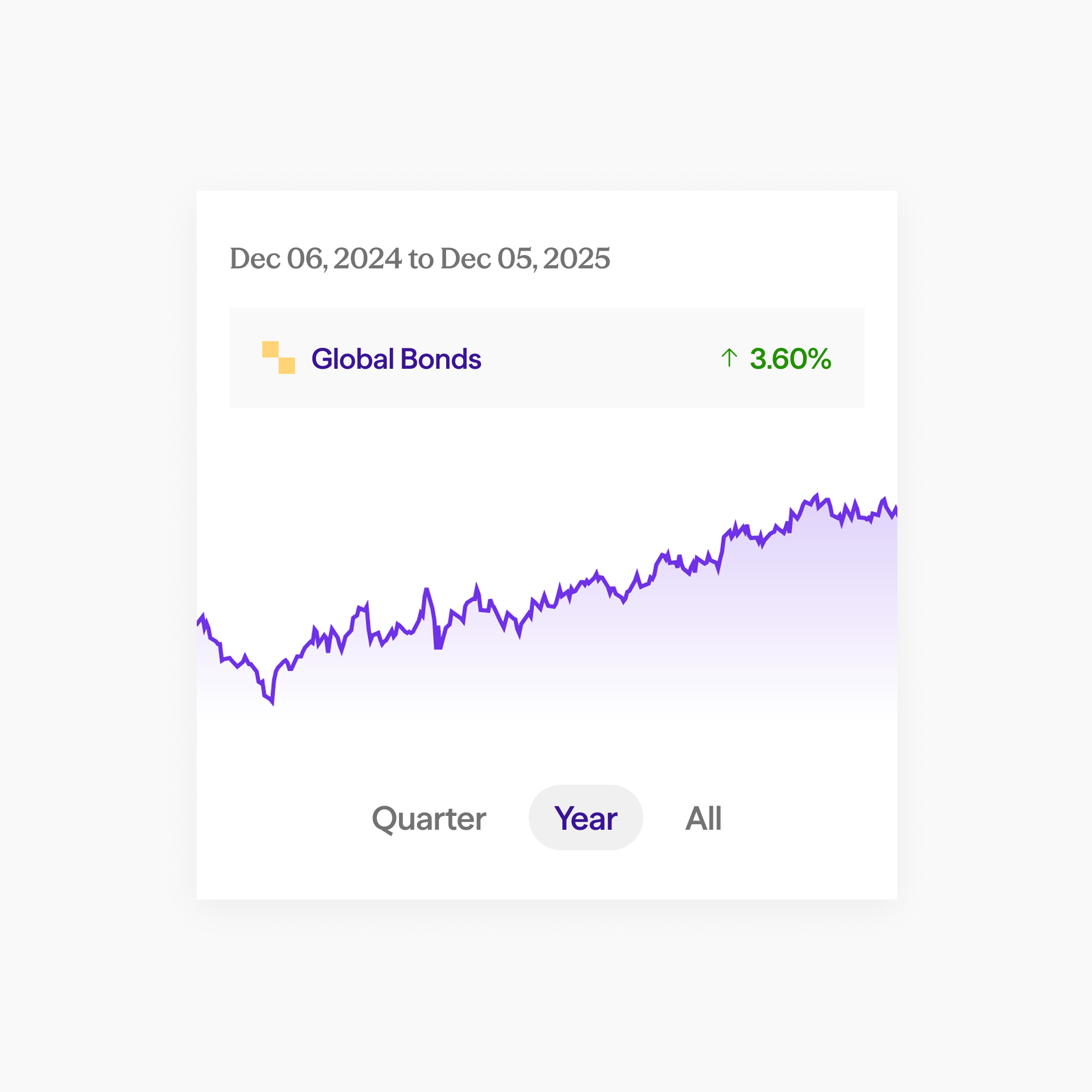
Carefully selected for diversification and defensive qualities, Global Bonds are designed to smooth volatility in a portfolio.
.webp)

A counterbalance to your stock exposure
Global corporate and government bonds can add a stabilising layer by behaving differently to equities, helping reduce portfolio volatility and providing steadier performance alongside your growth assets.
Interest rate sensitivity
Bond prices can move up or down as interest rates change. If rates fall, bond prices may rise, and vice versa.
Please remember, investing should be viewed as longer term. Your capital is at risk - the value of investments can go up and down, and you may get back less than you put in.
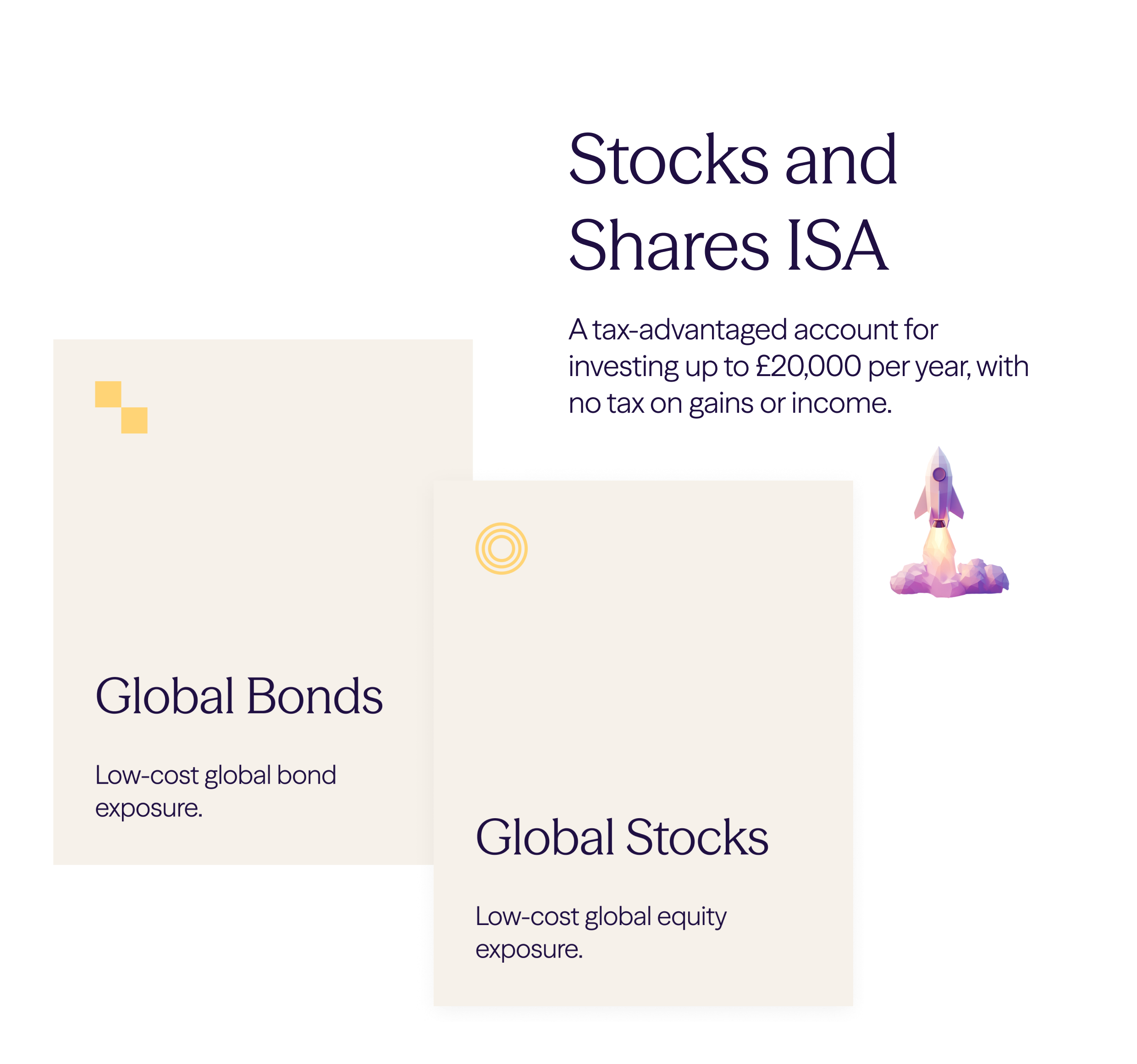
Tax-free gains with a Stocks and Shares ISA
Maximise your returns by holding your Global Stocks and Global Bonds investments within an ISA, at no extra charge. Enjoy the same growth while benefiting from tax-free interest and gains - helping you make the most of your investments.
Why add Global Bonds to your portfolio?
Our dedicated team is focused on maximising your wealth.

Balance a growth-focused portfolio
Global Bonds can be used to offset the volatility of stocks, helping smooth returns and support a more balanced investment strategy.

High-quality exposure with lower risk
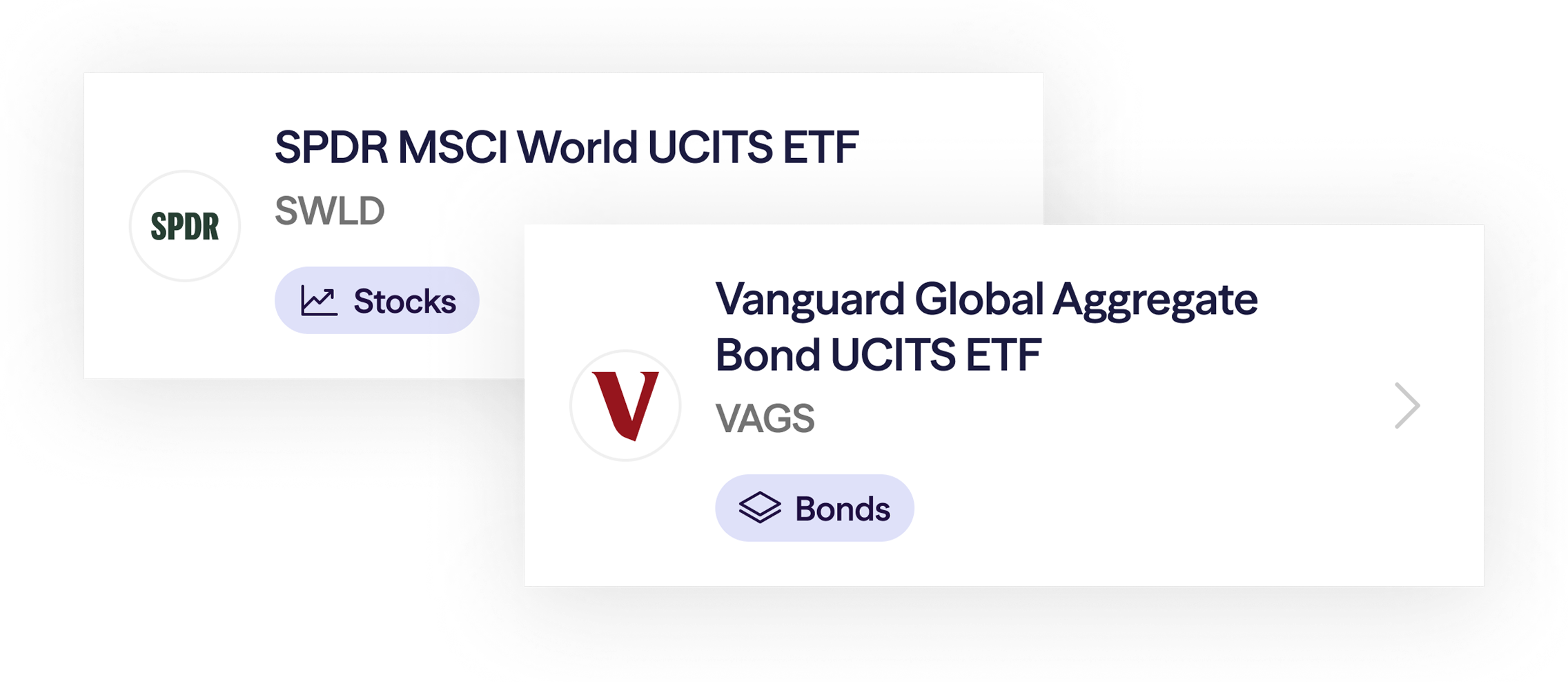
The ETF only invests in investment-grade bonds, focusing on higher-quality issuers and reducing exposure to higher-risk bonds.

Potential upside when rates fall
Bond prices can move up or down as interest rates change. In environments where rates are falling, there is the potential for bonds to rise (and vice versa).
Get set up quickly

Your new way to wealth starts here
Modern tools. Human expertise. More control.

Any questions on Global Bonds?
Quick answers to your top questions
Is the Global Bonds portfolio safe?
The Global Bonds portfolio invests in bonds issued by governments and companies around the world. While bonds are generally less volatile than shares, this is still an investment product. The value can go up or down and your capital is at risk. Bond prices can fluctuate due to changes in interest rates, inflation expectations, and credit conditions.
What is the Global Bonds portfolio designed for?
The Global Bonds Portfolio is designed to provide diversification, income, and lower volatility compared to equity-focused portfolios. It is typically used as part of a broader investment strategy rather than as a standalone growth portfolio.
What’s the difference between the Global Bonds portfolio and holding cash?
Unlike cash or savings products, bonds are traded investments whose value can fluctuate.
The Global Bonds Portfolio offers the potential for income and diversification benefits, but it does not provide capital guarantees or FSCS protection in the same way as cash savings.
Is the Global Bonds portfolio designed to generate income?
The portfolio may generate income from bond interest payments, but income levels can change over time and are not guaranteed.
Any income is reflected in the value of the investment rather than being fixed or predictable.
What are the fees for the Global Bonds portfolio?
We try to be as transparent as possible about our fees and to keep costs down. Here is a link to our full fees and charges schedule.
To summarise, for the Global Bonds portfolio, we charge 0.25% AuM-based fees per year. This is charged as a percentage of your investment amount, and is billed monthly.
In addition, we pass through some additional trading and product, government and ancillary fees, which we call 'Portfolio Expenses'. For Global Bonds, we estimate this to be 0.10%. This includes:
- ETF costs: Any ETFs contained within the portfolio incur annual fund fees which cover the ETF fund management and transaction costs. They are charged by the ETF not by Sidekick and are deducted from the value of your investments and are subject to change.
- Market Spread: When we buy and sell assets on your behalf, the value of the price we pay will be impacted by "market spread". This is the difference between the price to buy and the price to sell - this can have have an impact on fees.
- Government or ancillary costs: E.g. UK Stamp Duty: 0.5% (applied by the UK Government when buying UK stocks electronically) and UK PTM levy: £1 on trades above £10k. These pass-through fees are subject to change and will be adjusted according to modifications by the Regulatory Authority.